
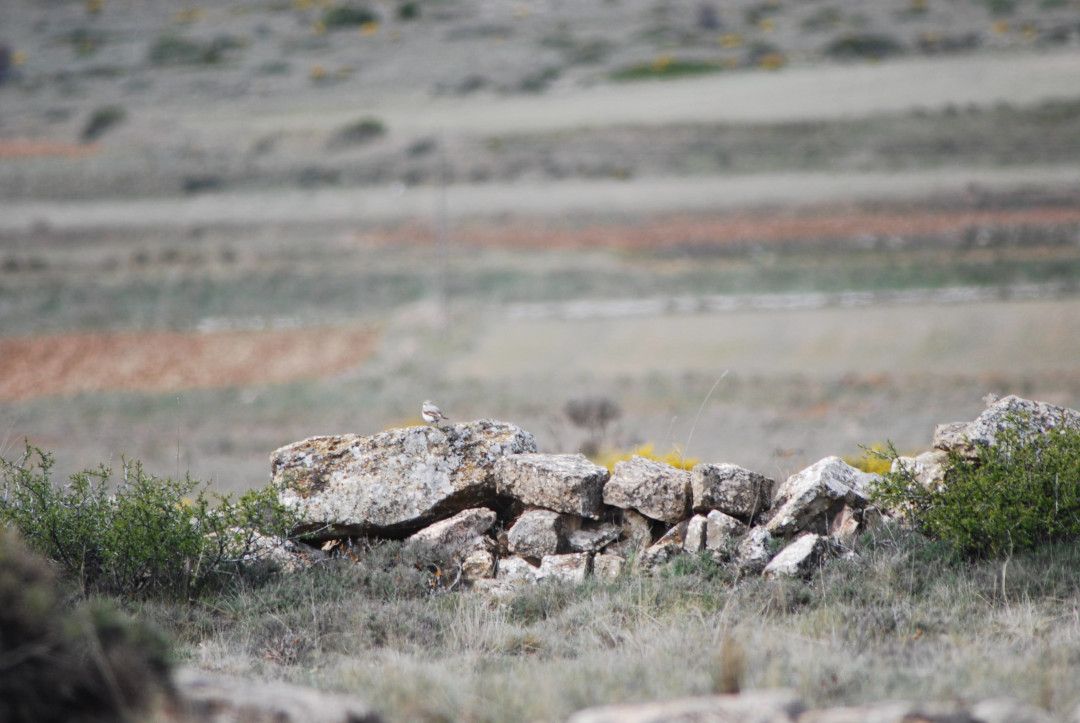
In winter, before dawn on the Iberian moors, the landscape is covered by a deep and cutting silenceDarkness covers a territory marked by temperatures that drop several degrees below zero, creating an environment where only the most adapted species manage to survive.
The parameras extend like a vast terrain of arid land that forms large expanses where no living being seems to be able to find refuge here, an ecosystem of extraordinary harshness. With the first rays of the sun, the landscape begins to reveal its particularities. A soft backlight outlines the peaks, slowly dissolving the winter fog.
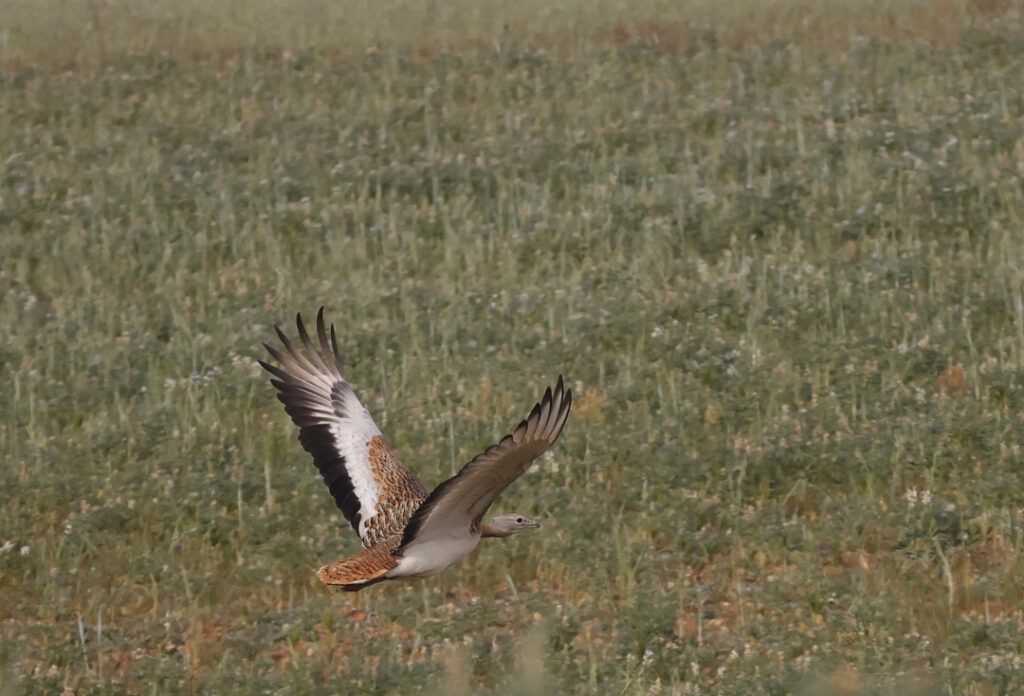
For the birdwatching enthusiasts, this scenario represents a unique opportunity for observation. Species perfectly adapted to these arid territories begin their daily activity. Great bustards, cranes, storks, larks, partridges, sandgrouses and little bustards are the many that can be found in steppe lands, but if we approach a humid area where the lagoons create small climatic refuges for some birds, the variety increases to very high numbers.
Birdwatching in winter requires specialized equipment and meticulous preparation. Ornithologists and nature photographers brave the freezing temperatures to document the behavior of these unique species, capturing moments that reveal fascinating survival strategies. If you are one of them, check your equipment twice and make sure you have everything you need, especially a coat.
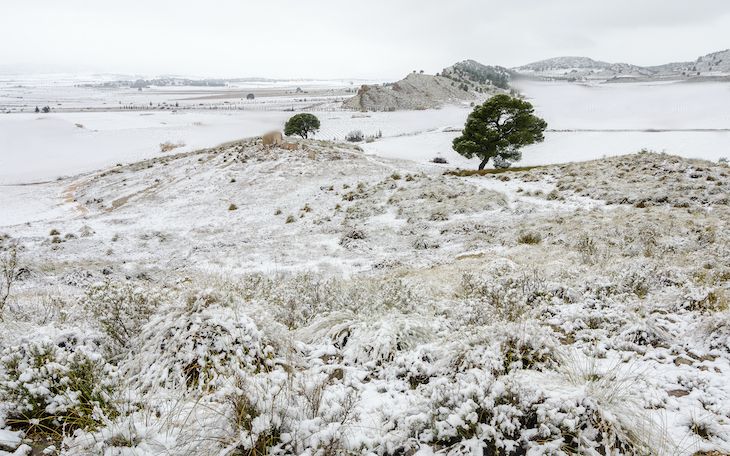
In an almost magical moment, the sun emerges completely, illuminating a landscape that is both a scientific challenge and an impressive natural setting. The Iberian moors in winter are a living laboratory where nature deploys its most sophisticated adaptation mechanisms.
An important technical detail: the temperature in these areas can range from -15°C to 0°C during the winter dawn, making survival a constant exercise in biological precision for every species present, including us.