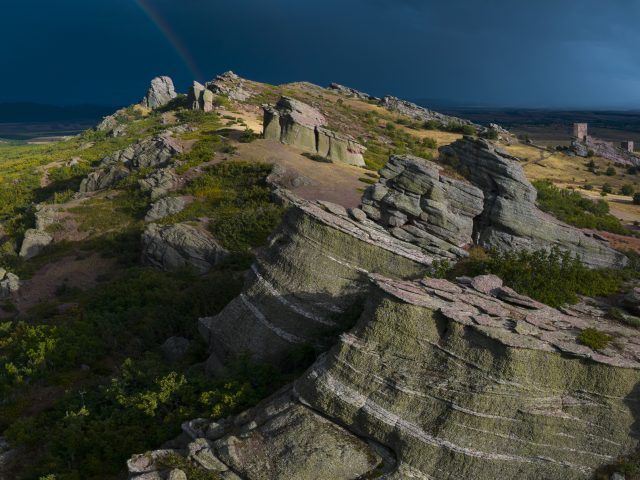
Rillo de Gallo icnites
Cradle of Spanish paleontology and home of the first dinosaur footprint
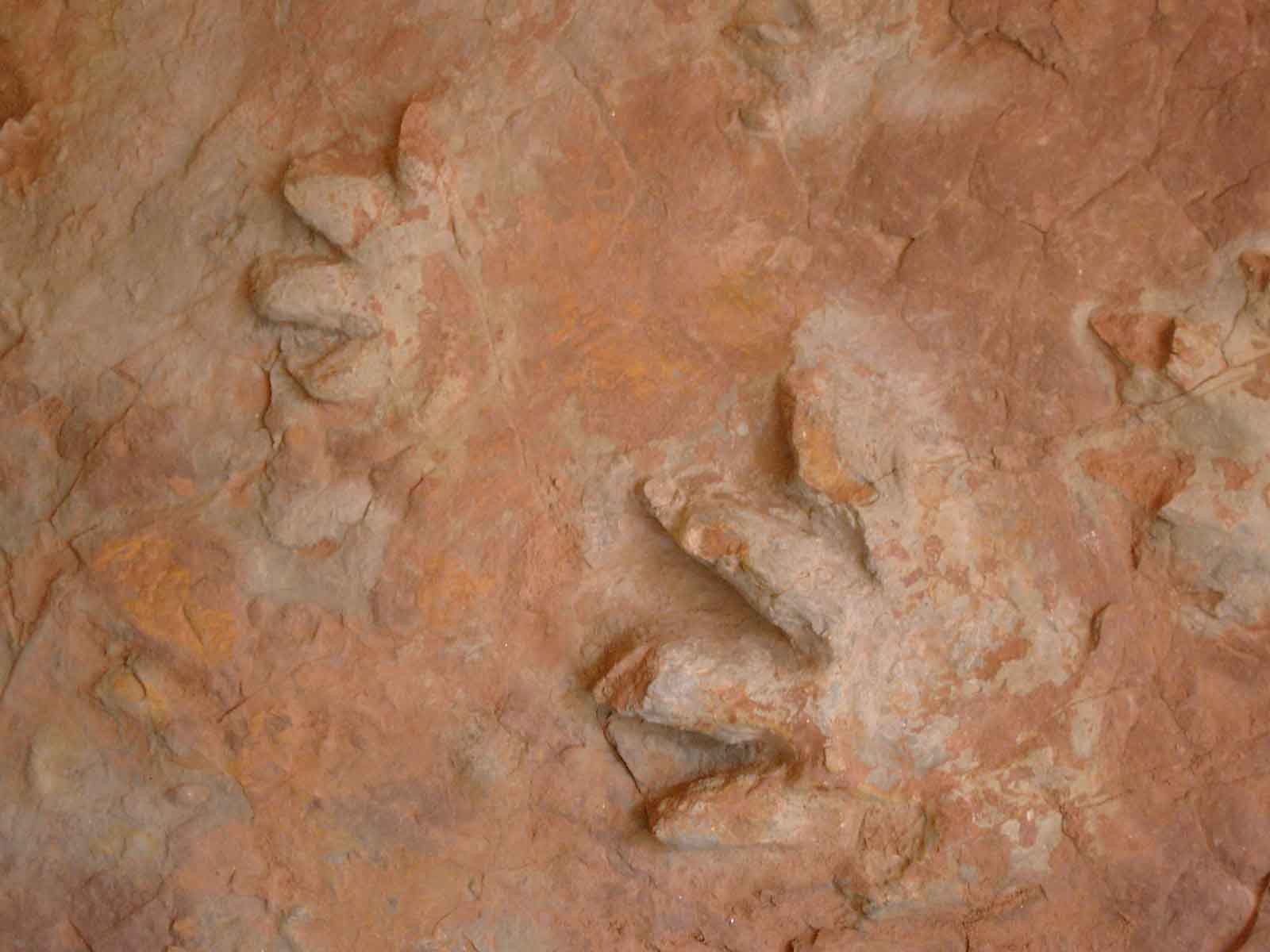

In 1896, a resident of Rillo de Gallo (Guadalajara) found a "stone leg of a bug", a fossil footprint that would become a milestone in Spanish paleontology. It was about the first dinosaur footprint documented in our country, years before the best-known finds in Teruel and La Rioja.
A trip to prehistory
The footprint, a left ichnite of a triassic reptile, was classified as "Cheirotherium sp." by Salvador Calderón y Arana in 1897. This discovery takes us back to a fascinating time, a few 250 million years, when the Triassic was the scene of a great radiation of reptiles, including the first dinosaurs.
A scientific legacy
Rillo de Gallo's footprint is today found in the Vertebrate Paleontology Collection of the National Museum of Natural Sciences of Madrid. It has become a fundamental piece to understand the evolution of reptiles and life in the Triassic.
A mystery to solve
The producer of icnitas like that of Rillo de Gallo remains a mystery. There has been speculation about its origin, pointing to quadruped reptiles related to the thecodonts or members of the Crurotarsi clade, which includes modern crocodiles.
Unexplored potential
The Spanish Triassic, both in ichnites and bones, is a field yet to be explored. Fossils and outcrops with possibilities exist, and without a doubt our country can contribute to solving the enigmas that surround these traces of the past.
A source of pride for Rillo de Gallo
The discovery of the first dinosaur footprint in Spain is a source of pride for Rillo de Gallo. This small town has become a reference place for Spanish paleontology, a place that invites you to discover the secrets of the past and reflect on the fascinating history of our planet.
Discover unforgettable settings and natural jewels, the places you cannot miss in the Parameras.