
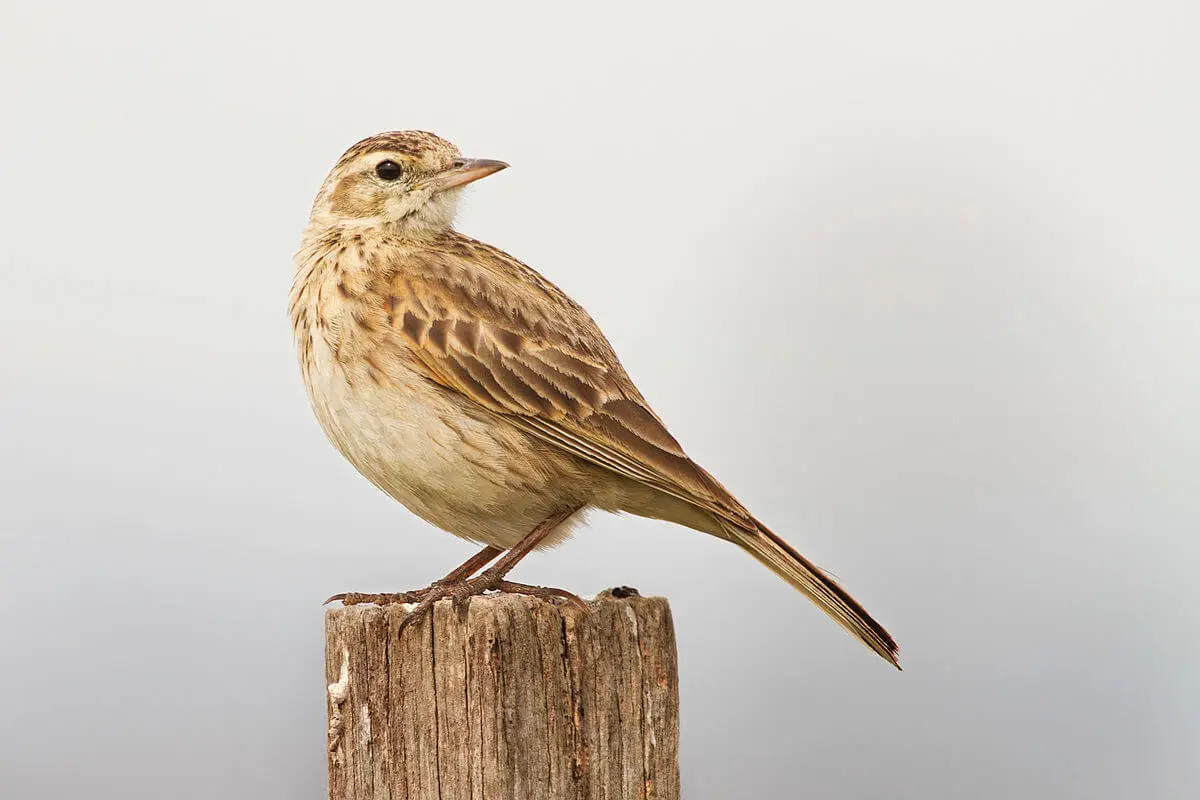
The Iberian Parameras are an enclave of great ecological value, home to a rich biodiversity adapted to extreme conditions. Among this fauna, a particularly striking group of birds stands out: the steppe birds. These species, linked to the vast grasslands and steppes, have developed unique adaptations to survive in these open and arid environments.
Characteristics of steppe birds
Steppe birds are characterized by:
- Adaptations to the environment: They have developed physical and behavioral characteristics that allow them to live in open, dry environments, such as long legs for walking long distances, cryptic plumage for camouflage, and diets adapted to scarce resources.
- Ground nesting: Many species build their nests directly on the ground, making them vulnerable to predators and human disturbance.
- Migrations: Some species undertake seasonal migrations in search of food and more favorable climatic conditions.
- Varied diet: Their diet is very varied and can include insects, seeds, small vertebrates and plants.
Main species of the Iberian Parameras
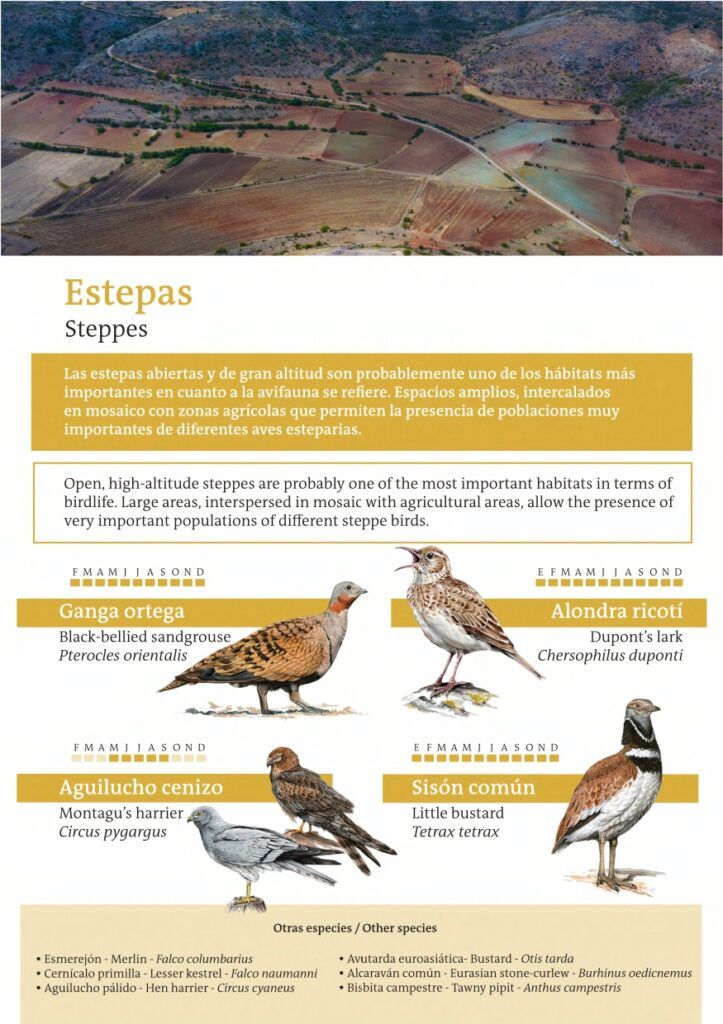
- Little Bustard (Tetrax tetrax): One of the most emblematic species of the European steppes, with males putting on spectacular displays during the breeding season.
- Iberian sandgrouse (Pterocles alchata): Medium-sized bird with cryptic plumage that allows it to camouflage itself on the ground.
- Sandgrouse (Pterocles orientalis): Similar to the Iberian sandgrouse, but with a more restricted distribution.
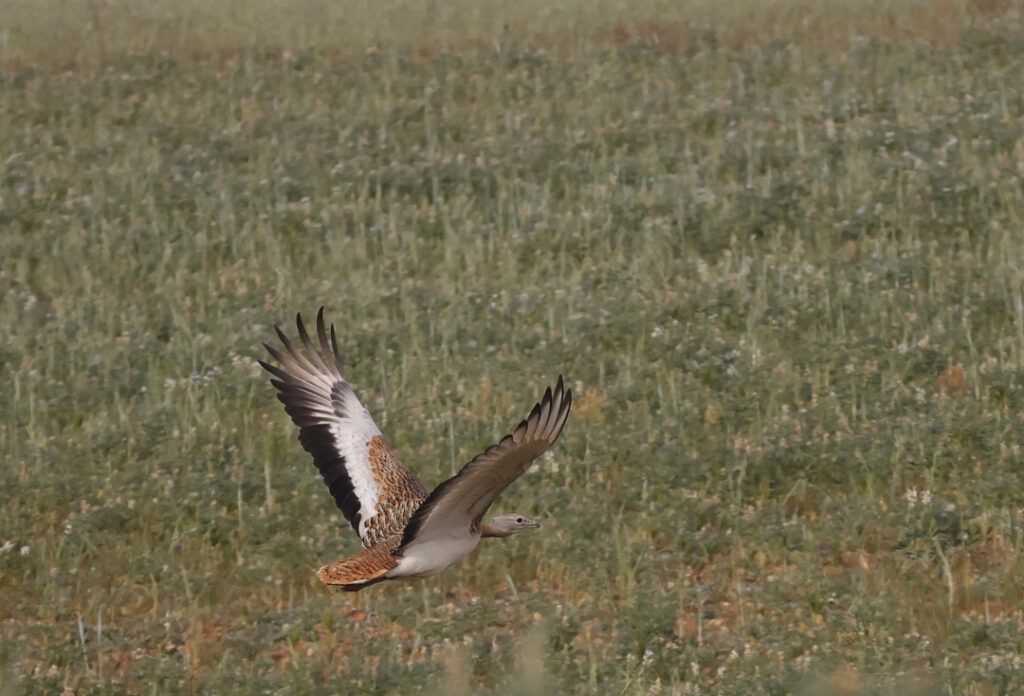
- Great Bustard (Otis tarda): The heaviest flying bird in Europe, with males reaching several metres in wingspan.
- Dupont's lark (Chersophilus duponti): As we have already seen, a critically endangered species.
- Calandra lark (Melanocorypha calandra): A medium-sized bird with a very characteristic song.
- Common Groundhog (Calandrella brachydactyla): A small lark very common in cultivated fields.
- Montagu's Harrier (Circus pygargus): A bird of prey specialized in hunting small mammals and birds in grasslands.
Threats and conservation
Steppe birds in the Southern Iberian System face various threats that endanger their survival:
- Habitat loss and fragmentation: Agricultural intensification, urbanization and forest expansion have dramatically reduced the extent of steppe grasslands.
- Changes in agricultural practices: The decline in extensive livestock farming and the abandonment of traditional farming systems have modified the landscape and reduced the availability of food for birds.
- Use of pesticides: Soil and water pollution by pesticides affects invertebrate fauna, the main source of food for many steppe birds.
- Illegal hunting: Poaching remains a threat to some species, such as the great bustard.
- Collisions with infrastructure: Power lines and wind farms can cause the death of many birds, especially larger species.
To conserve these species and their habitats, various initiatives are being undertaken, such as the creation of protected areas, the restoration of degraded ecosystems, the promotion of sustainable agricultural practices and public awareness.
The role of steppe bird conservation
The conservation of steppe birds is not only important for these species in particular, but also benefits many other organisms and ecosystems as a whole. These birds are indicators of the health of grasslands and steppes, and their disappearance would be a sign of the degradation of these valuable ecosystems.
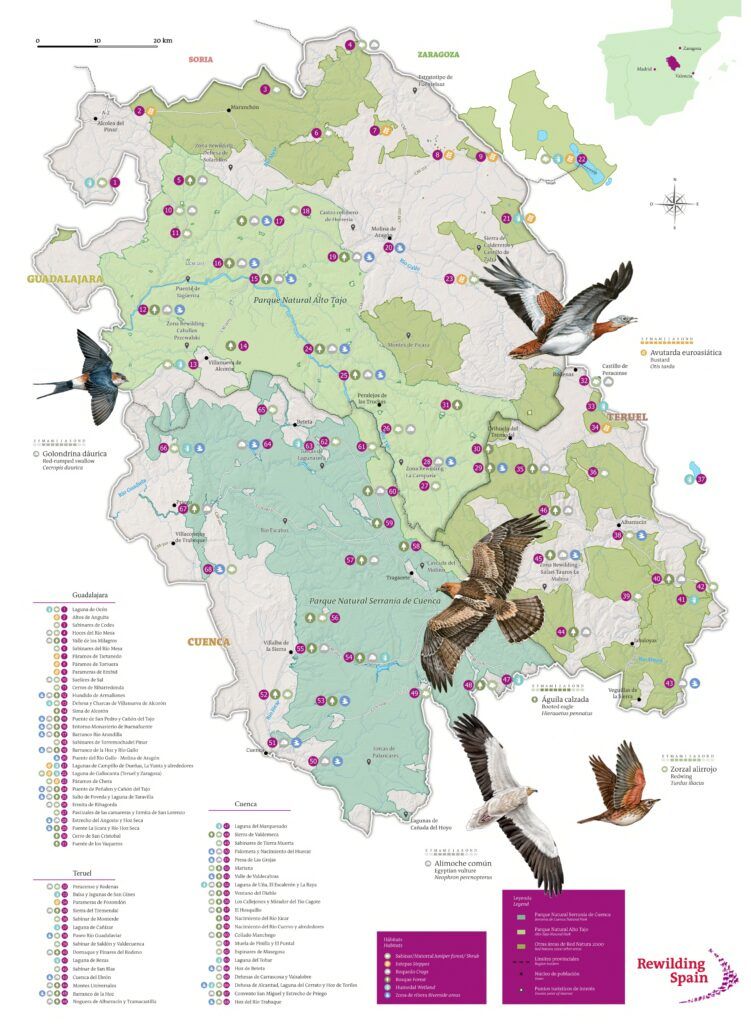
The steppe birds of the Southern Iberian System are a natural treasure that we must protect. Their conservation requires coordinated efforts between administrations, scientists, farmers and citizens. By protecting these birds, we are also protecting our landscapes and our own quality of life.