
The resilience It has gone from being a scientific term to becoming a buzzword, but its true meaning transcends superficial definitions. It's not just about resisting life's blows, but about adapt, transform, and flourish even in the most adverse conditions. And if we want to understand this ability in its purest form, there's no better teacher than the nature of the Iberian moorlands.
In these arid plateaus In the interior of the Iberian Peninsula, where water scarcity is the norm, temperatures fluctuate between brutal extremes, winds shape the landscape, and solitude stretches to the horizon, every living being has developed survival strategies that border on genius. It's no coincidence that they've survived here for millennia: they are masters of resilience.
What can we learn from the nature of the moorland for our own lives? The answer is written in every leaf adapted to drought, in every animal that has found a way to thrive where others cannot, in every strategy that evolution has perfected over millions of years.
The setting: the moorland as a university of life
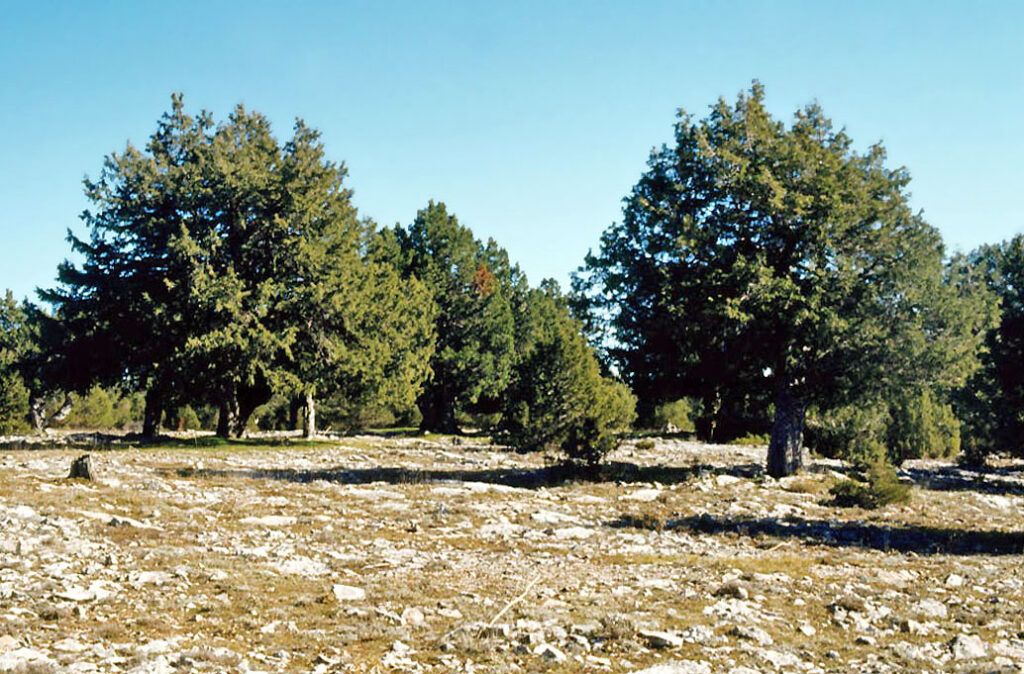
The Iberian moorlands These are not easy places. These limestone plateaus, which rise between 1,000 and 1,300 meters above sea level, represent one of the most demanding environments on the Iberian Peninsula. Here, water is a scarce resource that must be fully utilized; temperatures can fluctuate by 60 degrees between winter and summer; and the constant winds turn any vertical challenge into a test of endurance.
But paradoxically, it is precisely this hardness which has created a natural laboratory for survival strategies. In this environment, nothing is random, nothing is accidental. Every form, every behavior, every adaptation is fine-tuned to the limits of what is possible. Nature has had millions of years to experiment, make mistakes, learn, and perfect.
The result is a ecosystem Where each species represents a life lesson, where each survival strategy can be translated into wisdom applicable to our own challenges. The paramera is not an empty territory: it's a school of resilience where every element has something to teach.
Masterclasses on Paramerense plants
The juniper: firm roots in changing environments
The Sabina Albar (Juniperus thurifera) is perhaps the oldest teacher of these lands. Some specimens are over a thousand years old, having withstood historic droughts, brutal winters, storms that have brought down entire forests. Its secret is not in its rigidity, but in its intelligent flexibility.
Its branches twist and adapt to the prevailing wind direction, but its roots extend deep and horizontally, creating an anchoring network that can extend up to 30 meters from the trunk. The lesson is clear: Keep your roots firm but be flexible on the surfaceIn our lives, this translates into maintaining our core values while adapting to changing circumstances.
The juniper also teaches us about the patience: It grows slowly, taking decades to develop its root system before reaching its full height. In a world obsessed with immediate results, the juniper reminds us that solid foundations take time.
Lavender and thyme: the power of small gestures
He lavender (Lavandula latifolia) and the thyme (Thymus vulgaris) have developed a seemingly modest but extraordinarily effective strategy: concentrating their essence in minimal spaces. Their leaves are small and waxy, designed to minimize water loss, but when they bloom, they completely transform the landscape with their aroma.
These plants teach us that You don't need to be big to make an impactThe essential oils they produce not only protect them from herbivores and pathogens, but also create microclimates that benefit other species. It's a lesson in how small gestures, consistently maintained, can transform entire environments.
In our lives, this translates into the importance of seemingly insignificant actions But consistent: a daily smile, a gesture of help, a word of encouragement. Like lavender, we can perfume our surroundings without taking up much space.
Ephemeral flowers: intensity at the right moments
The wildflowers The blooms that explode on the moorlands in spring offer a different but equally valuable lesson. Plants like chamomile and small cruciferous vegetables remain as discreet, almost invisible rosettes for most of the year, but when the spring rains arrive, they explode into spectacular blooms.
These plants have learned to live intensely the moments of opportunityThey don't try to flourish when conditions are adverse; they wait patiently, and when their time comes, they make the most of it.
For us, this means learning to distinguish between moments of resistance and moments of actionNot every season is a time of expansive growth; sometimes we need to conserve energy and wait for the right moment to unleash our full potential.
The animals of the moorland: masters of adaptation
The stone curlew: the power of discretion
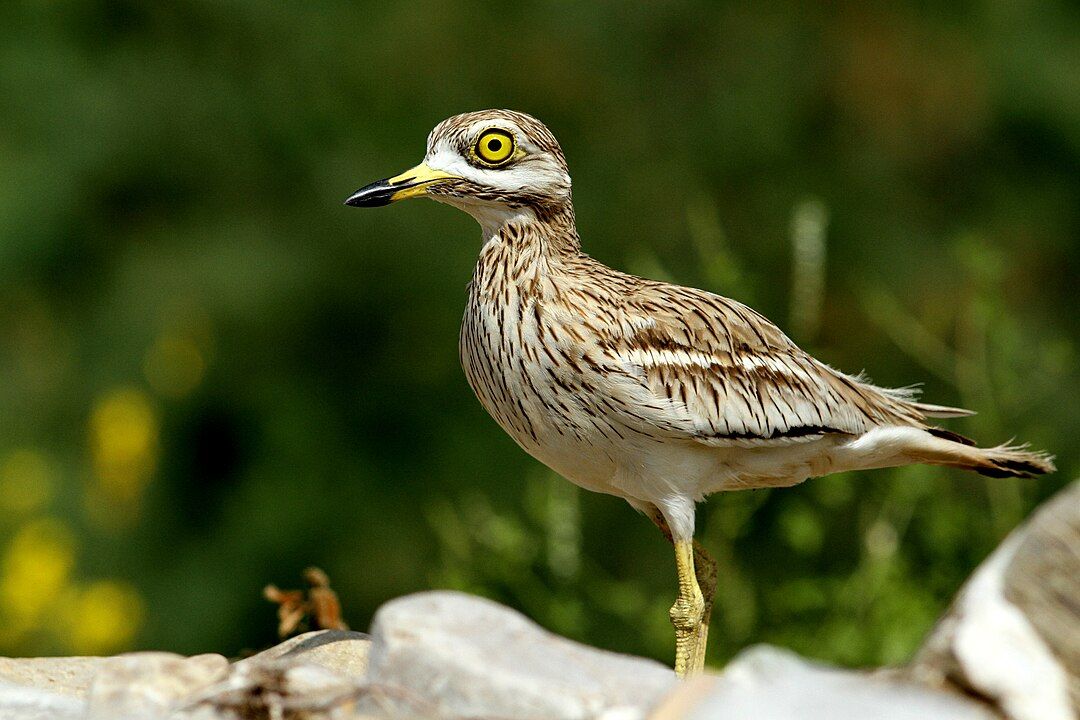
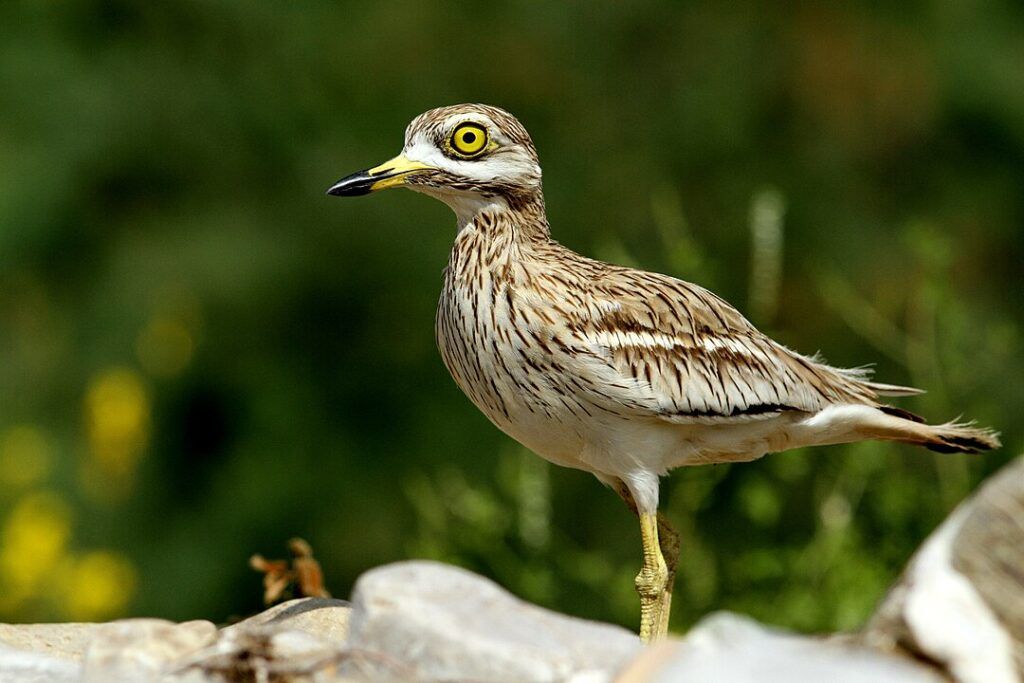
He stone curlew (Burhinus oedicnemus) is a bird that has turned camouflage into an art. Its plumage blends perfectly with the stony ground of the moorland, and its behavior is an example of intelligent discretionWhen it detects danger, it remains completely still, trusting in its ability to go unnoticed.
This strategy teaches us that you don't always have to stand outIn certain situations, wisdom lies in knowing when to stay in the background, when to observe before acting, when prudence is more valuable than visibility.
The stone curlew also shows us the importance of know our environmentThese birds know every rock, every shelter, every escape route in their territory. In our lives, this translates into the importance of deeply understanding our context before making important decisions.
The red-legged partridge: strategy in open terrain
The red-legged partridge (Alectoris rufa) has developed sophisticated strategies for breeding in an environment without natural shelters. Their nests are simple depressions in the ground, but their reproductive success is based on distraction strategies and coordination between the couple.
When a predator approaches the nest, one of the parents pretends to be injured, warding off danger to the young. It's a lesson about intelligent sacrifice: Sometimes protecting what we value most requires taking personal risks.
The partridge also teaches us about the importance of planning. It carefully chooses its nest location, synchronizes reproduction with seasonal food availability, and keeps escape routes readily available. In our lives, this translates into the importance of foresight and preparation.
The fox: adaptability and ingenuity
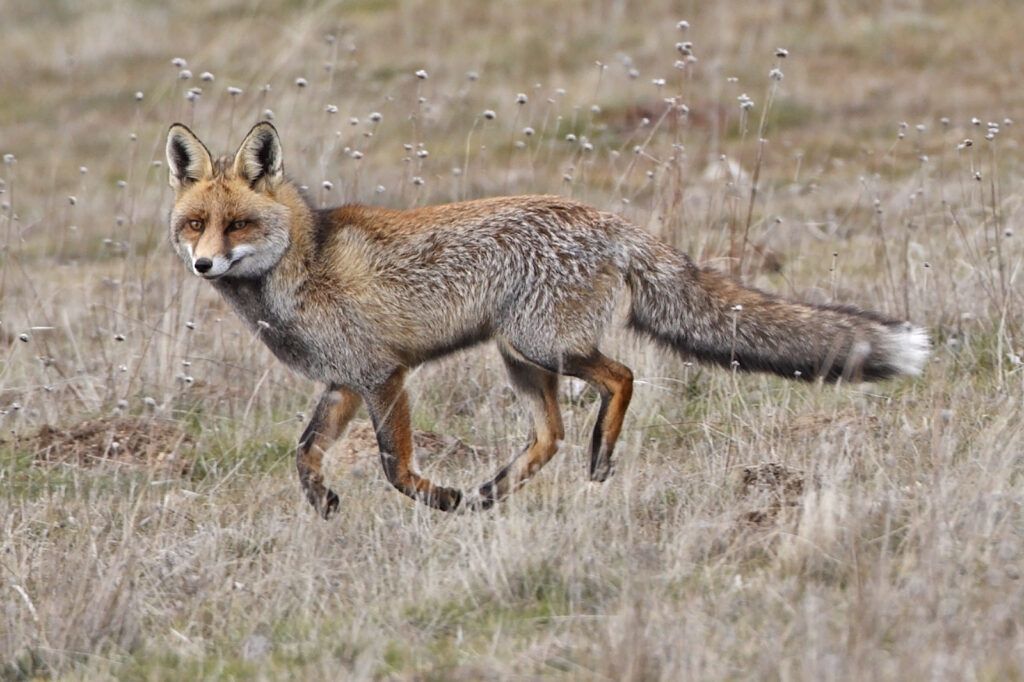
He fox (Vulpes vulpes) of the parameras has developed a food versatility extraordinary. It can hunt small mammals, capture insects, consume wild fruits, and even scavenge carrion. Its diet changes according to the season and available opportunities.
This flexibility teaches us about the importance of adaptation In the face of rigid specialization. In a changing world, those who thrive are those who can adjust their strategies according to circumstances, keeping multiple options open.
The fox also shows us the intelligence of opportunityHe doesn't waste energy on impossible pursuits; he evaluates, plans, and acts when the odds of success are greatest. It's a lesson in energy efficiency applied to our personal projects.
Pollinating insects: community resilience
The pollinating insects The moorland's ecosystems have developed a network of interdependencies that ensures the survival of the entire ecosystem. Bees, butterflies, beetles, and other insects have synchronized their life cycles with the blooms, creating a system of silent cooperation.
This network teaches us that True resilience is often collectiveInstead of competing destructively, these species have found ways to benefit each other. The plants provide nectar, the insects ensure pollination, and the whole thrives.
For us, this means recognizing that Our individual strength is connected to the well-being of our communityResilience is not only a personal capacity, but also a social construct.
Practical Philosophy: Applicable Lessons
Cultivating patience in a fast-paced world
The nature of the moorland teaches us that Valuable processes take timeThe juniper doesn't try to grow quickly; wildflowers don't bloom out of season. In our lives, this translates into learning to value slow processes but sustainable as opposed to quick but ephemeral results.
Finding beauty in austerity
The parameras show us that beauty does not depend on abundance. Its seemingly arid landscapes reveal a unique aesthetic based on simplicity, subtle contrasts, and the harmony of adapted forms. This lesson invites us to reconsider our concepts of wealth and well-being.
Intelligent adaptation versus rigidity
All the species of the paramera have developed flexibility within clear limitsThey maintain their specific identity but adapt behaviors and strategies according to circumstances. In our lives, this means maintain our core values while developing the ability to adjust methods and approaches.
The value of cooperation over competition
The ecosystem of the parameras works based on networks of interdependence rather than in destructive competition. This lesson is especially relevant in a society that often prioritizes individual success over collective well-being.
Resilience as a vital inspiration
The moorland shows us that There are no empty territories, only ecosystems that we have not learned to read.Every plant twisted by the wind, every animal that has found its niche in extreme conditions, every survival strategy perfected over millennia represents a source of wisdom applicable to our own challenges.
If we learn to observe these apparently arid landscapes carefully, we discover life strategies that we can apply to our own difficulties: the importance of developing deep roots, the wisdom of conserving energy for opportune moments, the value of small, consistent gestures, the strength that comes from intelligent cooperation.
What lessons of resilience do you find in your immediate surroundings? Because in the end, every landscape, every ecosystem, every natural community has something to teach about the life's extraordinary ability to find paths even in the most challenging conditions.